By -Prince Neupane
Petrol just hit Rs 219/litre in Kathmandu as of today — the fourth hike in under a month. Meanwhile, hydropower keeps Nepal’s electricity among the cheapest in Asia. If you are deciding between an electric and a petrol car in 2026, this guide uses only verified government and institutional data to help you make the right call.
Breaking (April 10, 2026): Nepal Oil Corporation raised petrol by Rs 17/litre effective midnight Thursday, bringing Kathmandu Valley petrol to Rs 219/litre and diesel to Rs 207/litre. Source: NOC official price board & Radio Nepal.
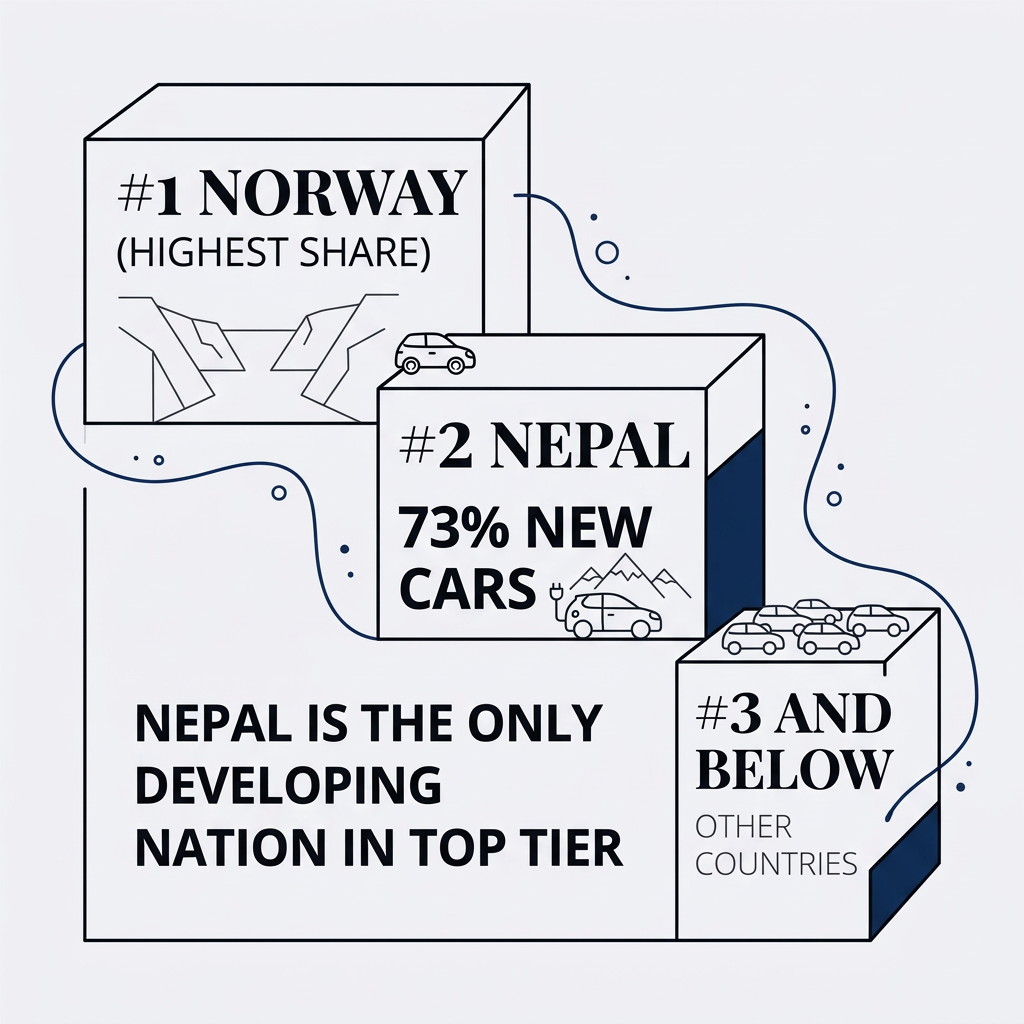
Nepal EV market snapshot (2026)
Nepal’s EV story is one of the fastest transformations in automotive history. Government data from the Department of Transport Management (DOTR) and the International Energy Agency confirm the scale of this shift.
EV charging cost and running cost per km
Nepal’s electricity is generated from over 90% hydropower (NEA / MoEWRI data), making it among the cleanest and cheapest in Asia. Residential electricity in Nepal costs just Rs 5.79–12 per kWh depending on monthly consumption slab (Global PetrolPrices, September 2025, citing MoEWRI).
| Charging method | Rate (Rs/kWh) | Approx. cost per km | Source |
|---|---|---|---|
| Home charging (NEA domestic slab) | 10–12 | Rs 1.5–2.5 | NEA tariff / EV Nepal |
| NEA public charging stations | 6–10.5 | Rs 1.0–2.0 | EV News Nepal, Feb 2026 |
| Private fast-charging (DC) | 15–20 | Rs 2.5–4.0 | EV News Nepal, Feb 2026 |
At a 30 km/day Kathmandu commute (900 km/month), an EV charged at home costs roughly Rs 4,500–6,750 per month. The same journey in a petrol car costs Rs 14,000–18,000 per month at current pump prices — a monthly saving of Rs 8,000–11,000 in fuel alone.
Real-world EV range on Nepal roads
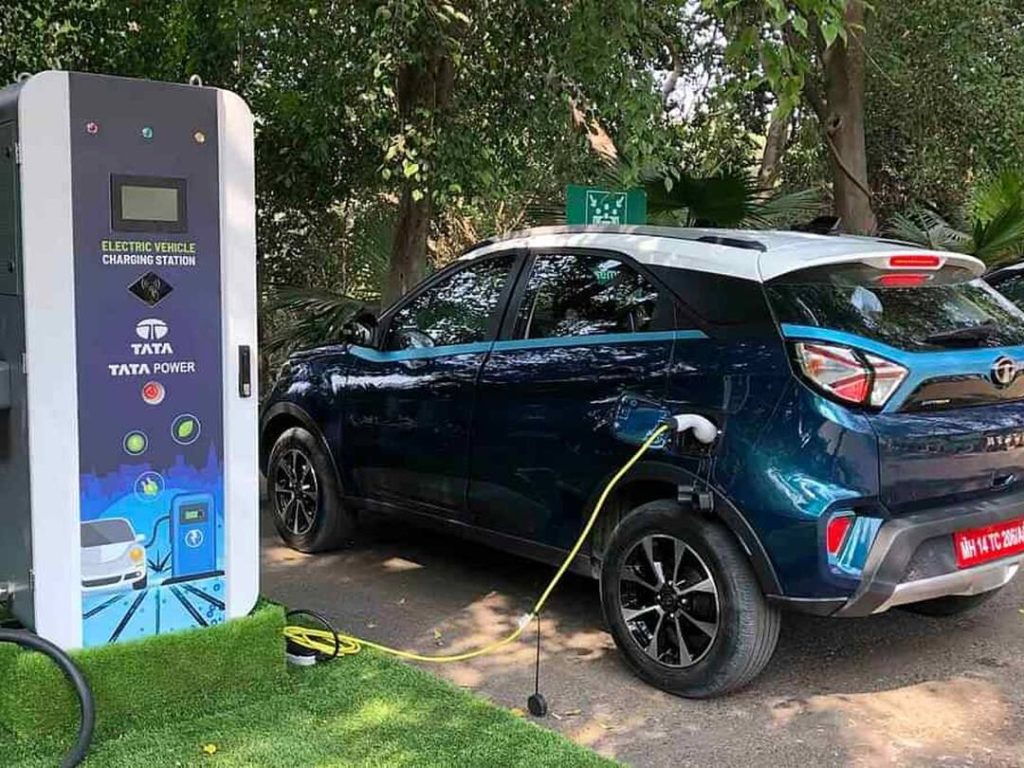
Advertised NEDC or WLTP ranges for EVs available in Nepal (BYD, MG, Tata, Neta) typically fall between 300 and 500 km. Real-world performance in Nepal is materially different due to traffic, elevation, and AC use.
| Condition | Real range (km) | Why it varies |
|---|---|---|
| Kathmandu valley city driving | 220–320 | Stop-go traffic, AC use, regen braking benefit |
| Flat highway (e.g. Terai) | 320–450 | Steady speed, no steep climbs |
| Hilly roads (e.g. to Pokhara, Nagarkot) | 170–280 | 15–25% range drop from elevation gain |
| High-altitude / cold (Mustang, Kalinchowk) | 140–220 | Battery capacity reduces in cold weather |
For a typical Kathmandu office commuter covering 30–50 km daily, a single full charge lasts 4–8 days. Long-distance Kathmandu–Pokhara runs (~200 km one way) are feasible for higher-range models but require at least one charging stop on the upgraded Prithvi Highway corridor.
EV charging station network in Nepal — 2026
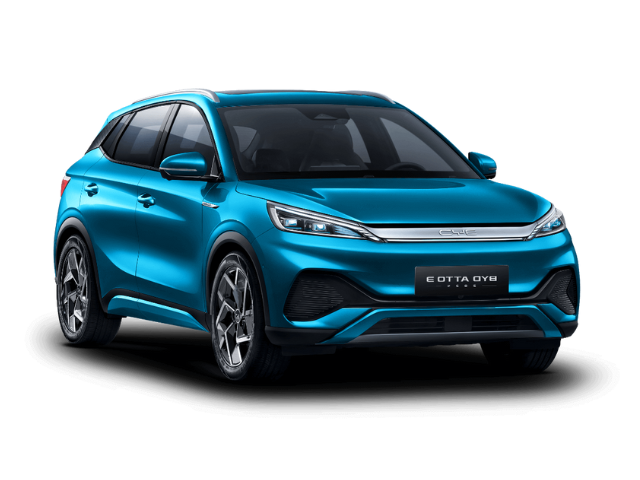
Charging infrastructure has expanded dramatically. According to Wikipedia’s regularly updated article on EVs in Nepal (citing NEA and industry data), the number of public and private charging points grew from fewer than 50 in 2020 to approximately 1,250–1,500 nationwide by mid-2025. NEA itself operates 62 of its own fast-charging stations as of early 2026.
| Operator type | Stations | Charger type | Rate |
|---|---|---|---|
| NEA (government-owned) | 62 stations | AC + DC fast (40–150 kW) | Rs 6–10.5/kWh |
| Private operators | 1,200+ points | AC (slow) + DC (fast) | Rs 15–20/kWh |
| Home / office (NEA domestic) | Unlimited | AC slow (3.3–7.4 kW) | Rs 10–12/kWh |
Key corridors now covered include Kathmandu–Pokhara (Prithvi Highway), Kathmandu–Birgunj (Mahendra Highway), and Kathmandu–Biratnagar (East–West Highway). Rural coverage outside these corridors remains limited a genuine constraint for buyers outside the valley or major towns.
Range anxiety reality check: If you live outside Kathmandu Valley and your regular routes include remote districts, verify charging availability before switching. The government’s 2030 target is 25% of all transport on electric — significant gaps remain in mountainous districts.
5-year total ownership cost comparison (75,000 km)
All figures below use verified April 2026 data. Petrol price used is Rs 219/litre (NOC, April 10, 2026). EV home charging rate used is Rs 11/kWh (midpoint NEA domestic slab). Vehicle purchase prices are indicative averages based on current market availability in Nepal.
| Cost category | Electric car (Rs) | Petrol car (Rs) | EV advantage (Rs) |
|---|---|---|---|
| Purchase price (avg.) | 35–45 lakhs | 25–32 lakhs | –10 lakhs (upfront) |
| Fuel / charging (75,000 km) | ~2.8 lakhs | ~12.2 lakhs | +9.4 lakhs |
| Annual road tax (5 years) | Minimal (Rs 2,000–5,000/yr) | Rs 15,000–30,000/yr | +1.0 lakh |
| Maintenance (oil, filters, etc.) | ~0.8 lakhs | ~2.5 lakhs | +1.7 lakhs |
| 5-year total (approx.) | ~38.6 lakhs | ~46.7 lakhs | +8.1 lakhs saved |
The breakeven point — where cumulative EV savings offset the higher purchase price — falls at roughly 2.5–3.5 years for average Kathmandu drivers, shorter for high-mileage users. According to Government data , switching from petrol to electric saves approximately Rs 175,000 annually at the current Rs 219/litre pump price.
Government policy and EV tax structure 2025/26
Finance Minister Bishnu Paudel confirmed in the FY 2025/26 budget that all existing EV tax and duty structures would remain unchanged, with the explicit goal of promoting cleaner transport and boosting domestic electricity consumption (Kathmandu Post, May 29, 2025). The government also granted a five-year income tax exemption to industries producing and assembling EV charging infrastructure.
| EV motor capacity | Customs duty | Excise duty | VAT |
|---|---|---|---|
| Up to 50 kW (small EVs) | 15–30% | 5–15% | 13% |
| 51–100 kW (mid-range) | 30–50% | 15–30% | 13% |
| 101–200 kW (premium) | 50–65% | 30–45% | 13% |
| 300 kW+ (luxury) | Up to 80% | Up to 50% | 13% |
Annual road tax for EVs is among the lowest in Nepal’s entire vehicle tax structure. Unlike petrol vehicles (taxed by engine cc), EVs are taxed by motor wattage. Provincial governments collect and set exact rates, but EV rates consistently undercut equivalent petrol vehicle taxes. EV two-wheelers continue to enjoy the most favourable rates to support urban commuter adoption.
Environmental impact: electric vs petrol cars in Nepal
Transport emissions are literally killing people. Understanding the environmental difference between electric and petrol cars in Nepal means looking at three things together: what petrol vehicles are pumping into Nepal’s air right now, where Nepal’s electricity actually comes from, and what the government has committed to doing about it. A petrol car driven on Kathmandu’s roads emits an average of 275 g CO₂ per km from its exhaust 88% above rated figures, per government-commissioned MOFE data. An EV charged from Nepal’s hydropower grid produces zero tailpipe emissions and a grid carbon intensity near zero. This is not a marginal difference. In Nepal’s context, the environmental case for switching to an EV is as clear as the savings on your fuel bill.
Pros and cons: electric vs petrol cars in Nepal
Electric car — pros
- Rs 1.5–4 per km running cost
- Minimal maintenance (no oil changes, spark plugs, or exhaust)
- Zero tailpipe emissions — critical in smog-hit Kathmandu
- Nepal’s hydro grid makes every km effectively renewable
- Low annual road tax (wattage-based, not cc-based)
- 5-year income-tax exemption on charging businesses
- Rs 175,000+ saved annually vs petrol (NOC estimate)
Electric car — cons
- Rs 10–15 lakh higher upfront purchase price
- 15–25% range drop on steep hilly roads
- Charging gaps in rural and mountain districts
- Cold weather (Mustang, high Himalaya) reduces range further
- Battery recycling ecosystem still underdeveloped
- NRB LTV change raised minimum down-payment to 40%
Petrol car — pros
- Lower upfront price for equivalent segment
- 600–800 km per tank range on flat roads
- Refuelling in 5 minutes at 4,000+ NOC stations
- Better suited for remote or off-grid destinations
Petrol car — pros
- Lower upfront price for equivalent segment
- 600–800 km per tank range on flat roads
- Refuelling in 5 minutes at 4,000+ NOC stations
- Better suited for remote or off-grid destinations
Verdict: which car wins for Nepali buyers in 2026?
For Kathmandu Valley residents and city commuters: electric cars are the clear financial winner, saving Rs 8+ lakhs over five years with today’s fuel prices. For regular long-distance travellers to remote or mountainous districts where charging coverage remains thin: a petrol car or hybrid remains the more practical choice until the national charging network matures. For most Nepalis — an electric vehicle is no longer just the greener option; it is now also the cheaper one.
FAQs
What is the current petrol price in Kathmandu in April 2026?
As of April 10, 2026, Nepal Oil Corporation has set petrol at Rs 219 per litre in the Kathmandu Valley, effective from midnight Thursday. This follows a Rs 17/litre hike and is the fourth increase since mid-March. Diesel is Rs 207/litre. These are official NOC prices, not estimates. Border areas pay Rs 216.50/litre for petrol.
How many EV charging stations are in Nepal in 2026?
Nepal had approximately 1,250–1,500 public and private charging points by mid-2025, up from fewer than 50 in 2020. The Nepal Electricity Authority (NEA) operates 62 of its own charging stations. Private operators account for the remainder. Major coverage corridors include Kathmandu–Pokhara, Kathmandu–Birgunj, and the East–West Highway. Rural and high-altitude districts remain underserved.
Do electric cars work well on Nepal’s hilly roads?
Yes, but with a real-world range reduction. Steep elevation gain typically cuts EV range by 15–25% compared to flat-road figures. City EVs like the Seres E1 and MG Comet Pace handle Kathmandu’s hills well for daily commuting. For routes involving sustained high-altitude climbs — Nagarkot, Daman, or the road to Pokhara — models with larger batteries (40+ kWh) are recommended and at least one charging stop should be planned. Cold temperatures in Mustang, Kalinchowk, and Solukhumbu reduce battery capacity further.
Are EV taxes going to increase in Nepal?
The government maintained existing EV tax structures in the FY 2025/26 budget. However, the FY 2082/83 budget signalled possible 10–20% increases in excise duties on some EV segments and introduced new excise on smaller EVs. Tax structures for vehicles above 300 kW can already reach 80% combined (customs + excise). Buyers of budget or mid-range EVs (up to 100 kW) are currently better protected than luxury segment buyers. Always verify with an authorised dealer before purchase.
What’s the biggest problem with electric cars?
Electric cars cover lesser range compared to petrol cars, and the vehicle travels a considerably lesser distance per charging cycle. Which means it’s risky to travel long distances in an electric vehicle.